

LATEST NEWS
Prison Visits without people: Media release 11 August 2025
Threat of Video Calls Replacing Physical Visits: 5 August 2025
Defence physical visits Silverwater Saturday July 12
Prison visit lies July 2025
OVERVIEW
For many incarcerated individuals, the opportunity to see a loved one, to hold a child’s hand, to hear a mother’s voice, or to laugh with a friend, can be a lifeline. These moments of connection are often what give meaning to an otherwise isolating experience, offering hope and grounding in an environment that strips people of autonomy and intimacy.
Authorities claim that video calls are a sufficient means of reducing the burden on families to conduct physical visits. However, the standard definition of ‘visit’, as stated in Oxford Dictionary, is to go to see a person or a place for a period of time – something inherently physical, reinforcing the basic human idea of maintaining physical social connection.
Audiovisual calls, while a useful supplementary tool for communication, do not meet this definition, as they lack the physical presence and personal interaction that are central to the concept of a visit. Physical visits provide emotional, mental, and social support that cannot be replaced through other forms of communication.
What these changes fail to consider is their human cost, the tears of a father waiting for a visit that never comes, the child’s confusion when promised time together turns into silence, and the family bonds slowly fraying under institutional indifference.
Everyone should have the right to visit a loved one in detention at a reasonable time, recognising the fundamental importance of maintaining family connection and dignity.
PRISON VISITS RIGHTS
International human rights instruments set persuasive benchmarks for prisoner rights, including the right to visit.
The Australian Human Rights Commission and rule 58 of the Nelson Mandela Rules specifically emphasise that prisoners should be able to communicate with family and reputable friends at regular intervals through correspondence and visits.
At the federal level, section 120 of the Australian Constitution establishes that each State must provide for the detention and punishment of people convicted of federal offences. While the Commonwealth Parliament may make laws to give effect to this, it does not directly legislate on prison visits.
The key legislative framework for managing prison visits in NSW is under the Crimes (Administration of Sentences) Act 1999 (NSW) and the accompanying Crimes (Administration of Sentences) Regulation 2014 (NSW).
Under clause 74, the governor of a correctional centre has the authority to permit visitors, either generally or for a specific inmate. Visiting hours are determined by the Commissioner and must be clearly posted outside the facility under clause 75. Visits must be allowed to continue for at least 30 minutes, unless otherwise terminated or extending beyond designated visiting times.
While the law permits discretion in granting and restricting visits, the general approach should be to facilitate meaningful social contact unless there is a compelling reason to limit it.
Human rights principles support the idea that regular visit is a fundamental component of prisoner welfare and rehabilitation.
BENEFITS OF IN-PERSON VISITS
“I was in prison and you came to visit me. … When did we see you sick or in prison and go to visit you? …Whatever you did for one of the least of these brothers and sisters of mine, you did for me.” Matthew 25:35-40 Bible
Research consistently supports the view that physical, face-to-face visit offers distinct and irreplaceable benefits.
1. Recidivism
“Touch is the sense that can heal,
It’s the way we cope, the way we feel.
It’s the way we mend broken hearts,
The way we make a new start.” – K.Randolph
In-person visitation has been consistently shown to reduce rates of recidivism and support reintegration. Maintaining strong social bonds through regular visits reinforces inmates’ ties to prosocial networks and fosters the emotional and relational stability necessary for successful post-release outcomes. It reduces the psychological distance between incarcerated individuals and the outside world, reinforcing a sense of accountability and belonging.
A hug from a child, a smile from a spouse, these are not luxuries, they are anchors that reconnect individuals to who they were before incarceration, and who they hope to become after.
2.Children and the need for physical contact
Children of incarcerated parents are among the most vulnerable groups impacted by imprisonment. Described as the ‘invisible victims’ of the criminal justice system. These children are at increased risk of poor mental and physical health outcomes, socioeconomic disadvantage, and adverse childhood experiences.
While video calls offer convenience and supplementary benefits, it cannot substitute the physical presence needed for emotional security, particularly for young children or those with disabilities.
Imagine the joy in a child’s eyes when they finally get to embrace their parent after weeks or even months apart. For that child, the warmth of a hug isn’t just a comfort, it’s confirmation that their parent is still real, still present, still theirs. When these moments of physical connection are denied, children are left clinging to their absence. These simple moments shared between parent and child are quiet affirmations of love and connection that no screen can replicate.
‘Touch is a powerful thing
It can calm the soul
Make hearts sing
No words are spoken, but more powerful than this
Is the touch that’s given with a soulful kiss’ – Michelle Trim Kiley
3. Family and parenting relationships
For incarcerated parents, visitation is a crucial component of maintaining their parenting identity. Contact with children during incarceration fosters emotional connection, reinforces parental responsibilities, and contributes to lower levels of parenting distress. Incarcerated parents often carry a double burden, both the weight of their sentence and the fear that their children will forget the sound of their voice or the feel of their embrace. Positive effects are significantly stronger with visits rather than video or phone calls, which often lack the emotional intimacy required to maintain meaningful parent-child relationships.
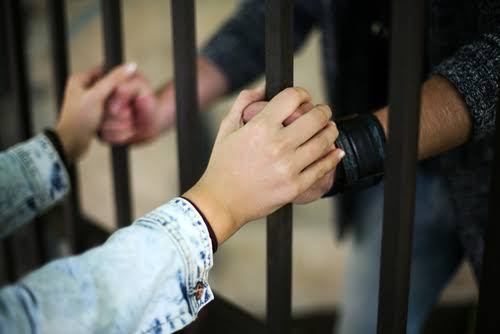
When the warmth of a loved one’s touch, the reassuring presence of their smile, and the simple act of holding hands is taken away and replaced by a cold screen, it can be deeply damaging for both the incarcerated person, and their family. The raw emotion, the healing power of a hug, and the unspoken words shared through glances are all irreplaceable. Thus, virtual visits can never replicate the depth of in-person connection.
“Touching hands is a simple thing,
But it can mean so much, it can make our hearts sing.
It’s the way our touch can convey,
All the words we can’t say.” – K.Combs
4. Communities safety and social reintegration
The ripple effects of in-person visits extend to community safety. By promoting successful reintegration and reducing recidivism, visits contribute to fewer repeat offences and a more stable post-release trajectory for former inmates.
Each in-person visit is not just a moment of connection, it is an investment in a safer, more cohesive society. Families thrive, communities heal, and individuals are reminded they are more than the sum of their mistakes.
PAST DEFENCES OF VISITING RIGHTS
Authorities restricting visits to those incarcerated in prisons is an enduring issue.
In the 2006 Emu Plains case, ‘all day’ weekend family and friends visits for women in prison at Emu Plains Correctional Centre would change to ‘split visits’, limited to a maximum of 2 hours. It was also claimed that the inmates had requested the changes regarding replacing day visits with the new scheme and were furthermore involved in the decision and implementation process. However, in reality prisoners were merely informed of the changes by the Inmate Development Committee (IDC).
This is the same narrative faced today, whereby Corrective Services NSW claim the substitution of a true, physical visit with a video call is requested by prisoners for the sake of their families.