
Threat of Video Calls Replacing Physical Visits
5/8/25:
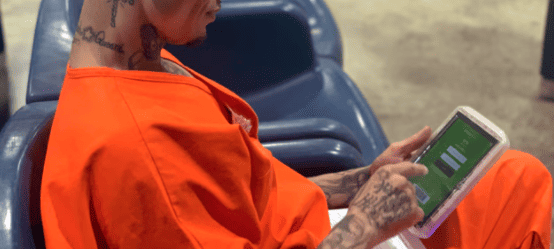
Justice Action has raised serious concerns about significant changes to prisoner visitation arrangements at Macquarie Correctional Centre, where Sunday physical visits have been replaced with video calls during a three-month trial period that began on 27 April 2025 to the Macquarie Correctional Centre Commissioner.
There are concerns about Corrective Services NSW’s (CSNSW) decision to substitute in-person family visits with tablet-based video calls, particularly towards the terminology used to describe these interactions. Justice Action argues that referring to video sessions as ‘visits’ is misleading, as true visits inherently require physical presence and contact.
Justice Action approached the Commissioner of Corrective Services about these changes, asking that the Commissioner acknowledge that a video “visit” is instead a video call and cannot replace a physical visit. On 31st July, the Commissioner responded to our requests and defended the use of ‘visit’ when referring to video calls by citing clause 122A of the Crimes (Administration of Sentences) Regulation 2014 (the ‘Regulations’) which considers a visit to include audio-visit link (AVL) visits. However, there is ambiguity in the legislation towards the meaning of ‘visit’ and ‘visitor’ when read together creating a conflict within the legislation as to whether ‘visit’ refers to meetings in-person and/or virtual.
“The standard definition of a ‘visit’ specifically pertains to physical attendance,” Justice Action stated in correspondence with the Commissioner. “Referring to video calls as ‘visits’ risks minimising the fundamental human need for physical presence and contact, particularly for prisoners with children.”
Beyond the terminology dispute, Justice Action’s recent survey of families with loved ones in custody has uncovered widespread issues with the current booking system:
- Intense competition for limited visit slots, which are frequently booked out within minutes of becoming available
- Reduced opportunities with only one available visit per weekend despite strong family demand
- Empty visiting rooms despite booking restrictions preventing family access
- Sudden cancellations of scheduled visits without adequate recourse for families
- Replacement rather than supplementation of physical visits with video calls across multiple facilities
We requested that a plebiscite be held for inmates at Macquarie Correctional Centre to hear from prisoners about the visitation issue. The Commissioner maintains that proper consultation occurred with Centre management and the Inmate Delegate Committee before implementing the trial, which offered Saturday in-person visits in conjunction with tablet-based video sessions during the trial. Yet we want to continue to emphasise the need for prisoner representation with these kinds of decisions. The Commissioner purports that CSNSW continues to support inmate-family contact and asserts that their current approach complies with legal requirements under the Regulations, and is therefore free to use the term Audio-Visual visits. This is wrong and misleading.
The Commissioner has said that the Regulations ‘provides the distinction between in-person visits…and AVL visits.’ He enforced that the policy intent of this regulation was to ‘allow for inmate use of technology in correctional centres for purposes including family and friend visits on tablets.’ However, we have put to the Commissioner that to ascertain legislative intent, we must look to the objectives of the parent Act as to which the Regulation is in subordination to. The Act’s statutory objectives outline that its intention is to ensure that offenders are placed in a ‘humane environment.’ We maintain that a ‘humane environment’ requires ‘kindness, care, and sympathy’ that does not deny prisoners the option of meaningful physical contact with their loved ones.
Additionally, physical visits are essential for prisoners’ rehabilitation and reintegration into the community. The rehabilitative benefits of human touch and interpersonal connection cannot be replicated by video calls.
Reducing physical visits to Saturdays only, disproportionately classifies all inmates as high-risk cases. This contradicts the differentiated categories of inmates envisioned by the Regulations.
Justice Action is of the belief that CSNSW ‘has chosen not to make the trial permanent’ and therefore is no longer removing physical visits on Sundays. However, we also have reason to believe that this will not be the end and continuous work is required to ensure that prisoners are afforded humane treatment.
Call for Democratic Process
Justice Action is still demanding a plebiscite among inmates at Macquarie Correctional Centre to allow prisoners to express their views on the replacement of Sunday physical visits with video calls. The organization argues this consultation is essential for “humane, rehabilitative and participatory prison policy.”
Drawing from direct conversations with visitors at the Silverwater complex, there was found to be universal support for maintaining physical contact. “Not one visitor reported that the visits were burdensome,” and “on the contrary, many emphasized the importance of seeing, touching and hugging their loved ones, especially children.”
Implications for Rehabilitation
The dispute highlights broader questions about prison policy and family relationships in the correctional system. Justice Action argues that meaningful family contact through physical visits is essential for maintaining relationships, supporting rehabilitation, and upholding basic dignity for incarcerated individuals. The ability to hug one’s parents, a fathers need to smell their new-born baby, these invaluable human experiences are inextricably linked to the wellbeing and rehabilitation of inmates.
The three-month trial at Macquarie Correctional Centre continues, but Justice Action maintains that any permanent changes to visitation arrangements must include meaningful consultation with both prisoners and their loved ones