
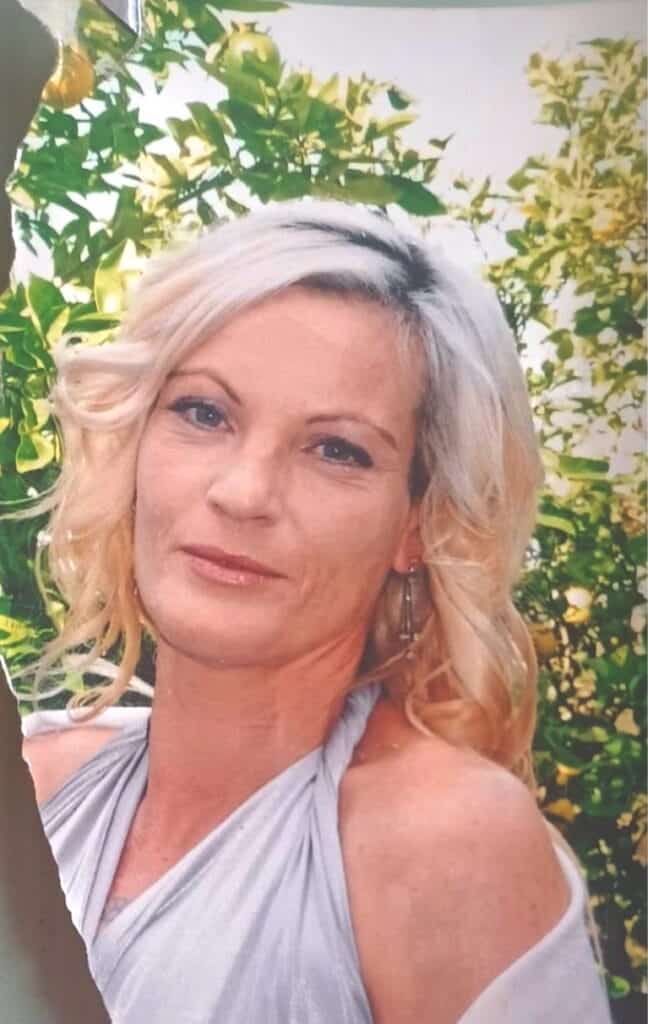
Suzette’s Lesson:
Prisoner community control of prisoner services
In honour of the life and work of Suzette Broderick, we call for organisations
servicing prisoners to have a majority of Board members and staff being former
prisoners. Full paper here Suzette’s Lesson
Suzette’s Lesson
Suzette Broderick was a revered leader in the prisoner community. Her lived
experience and the respect she had earned amongst prisoners obviously put her in a
unique position to fiercely advocate to improve the lives and prospects of other
prisoners; despite this, she was never given a job or training post-release that would
have enabled her to lift into a management role for participating in the direction of
women prison services. She instead got diverted into damaging relationships and
drug use, ultimately dying in tragic circumstances in November 2025.
The lesson we have taken from Suzette’s life and death is the need for community
control to be integrated into prisoner services, and for prisoners to be supported in
taking on leadership roles in them. Our aim is to achieve a situation where most staff
at prisoner service organisations are former prisoners, and most members of the
boards of such organisations are too. It has been demonstrated, time and again, that
community-led initiatives play an essential role in ensuring that the voice, needs, and
expertise of people with lived experience remain at the centre of advocacy and
service delivery. It is time for the principles of consumer-controlled funding to be
applied to prisoner services. The active involvement of those most affected by the
justice system is essential in shaping solutions.
Former prisoners who did time with Suzette – Lynda Rich, Leanne Carr, Naomi
Davis, Deb Yesimite, and Kat Armstrong – call for this change, as does Suzette’s
daughter Brittany Glasby.
More about Suzette
Suzette Louise Broderick (formerly Suzette Louise Glasby) was born on 29th
September 1974. She was arrested at the age of 20 on a charge of murder. While
she did not murder John Thiessl herself, she was found to have colluded with her
then husband, Gary Zane Glasby, and John’s wife, Carmela Thiessl, for the murder.
She was sentenced to a minimum of nine years in prison with an additional three
years for refusing to name her husband as a principal offender.
During her time in prison, she became highly-regarded as both a leader and fighter.
She cared for others who weren’t so strong and protected them from abuse. She
represented them in Prisoner Committees advocating for their rights, whilst also
servicing other women with hairdressing and presentation. She was Head of the then
Print Shop at Berrima Correctional Centre, and completed a variety of prison
education programs, including a Certificate 4 in Business Office Administration,
numerous computer courses, and a statement of attainment in horticulture.
On release, she joined the board of the Women In Prison Advocacy Network
(WIPAN) along with Kat Armstrong. She later became the Vice-President and
President of WIPAN, now known as the Women’s Justice Network (WJN). This
community-controlled organisation is aimed at offering support for female ex-
prisoners in response to a lack of support for women in correctional institutions. The
goal is to advocate for systematic changes in prisons, improve support available to
women in prisons, and reduce recidivism. Suzette was integral to its work, meeting
with Members of Parliament and CEOs from other services, and mentoring women
pre and post release from prison.
If Suzette had received the support she needed, training, and the means to project
her voice and experience, she would have become a significant leader for female
prisoners in the criminal justice system. Unfortunately, while some funded
organisations were pleased to be seen beside her, Suzette did not get the
opportunities offered to her to enable her to continue her work, and she struggled to
be relevant after her release.
Her death in November 2025 was attributed to a relapse in drug usage, a problem
which originated from the time prior to her sentencing. She also had an early history
of alcohol abuse and suicide attempts. Suzette’s lesson is also a recognition of the
susceptibilities of many women prisoners, and the consequent need to provide
support for them in their development into role models and inspiration for other
women in prison, and their assumption of governance positions in prisoner services.
Consumer-Controlled Organisations
Consumer-controlled organisations have the benefit of getting direction from
personal experience and empathy with those who use the services. This is
particularly important for those organisations whose consumers are vulnerable,
depend on government funding and are otherwise powerless. The services they
manage are co-designed by experts and individuals with lived experience. For
example, Aboriginal community-controlled organisations offer culturally appropriate
services developed specifically by Aboriginal people to improve health outcomes for
their communities.
The National Disability Insurance Scheme (NDIS), introduced in 2013, provides
people with disabilities the funds to seek and select services specific to their
disabilities. Before consumer-based funding was introduced via the NDIS, disabled
people had to beg from service providers who were directly funded by the
government, leaving the less wealthy or difficult cases little access to the services
they needed. A Productivity Commission analysis showed that the NDIS was three
times as effective in consumer satisfaction.
However, this scheme is still absent for Australian prisoner services. Currently,
taxpayer dollars are still invested into services and not the consumer, creating a
barrier that diminishes the quality and access for prisoners to seek the services that
they need.
It is time to introduce consumer-controlled funding for prisoner services so prisoners'
voices are heard and respected.
An appropriate way to honour the legacy of Suzette Broderick would be to provide
the permanent advances we are calling for here in grassroots leadership for prisoner
services. We need to learn Suzette’s lesson.
Community Controlled Organisations
Evidence of Effectiveness:
- https://link.springer.com/article/10.1186/s12889-020-09943-4
- https://www.lowitjajournal.org.au/article/S2949-8406(25)00035-X/fulltext
Further case information is available on AUSTLII:
- Regina vs Glasby 2000
- Garry Zane Glasby pursuant to s 78 of the Crimes
- Supreme Court of New South Wales v Suzette Louise Glasby
[1] Registrar, Criminal Division, Supreme Court of New South Wales v Glasby [1999] NSWSC 846 [4].